02 / MAIN DISH INGREDIENTS
Deep-fried Dish
- Chicken
- Buttermilk
- Butter
- Flour
- Eggs
- Breadcrumbs
- Peanut Oil
01 / ABOUT THE DISH
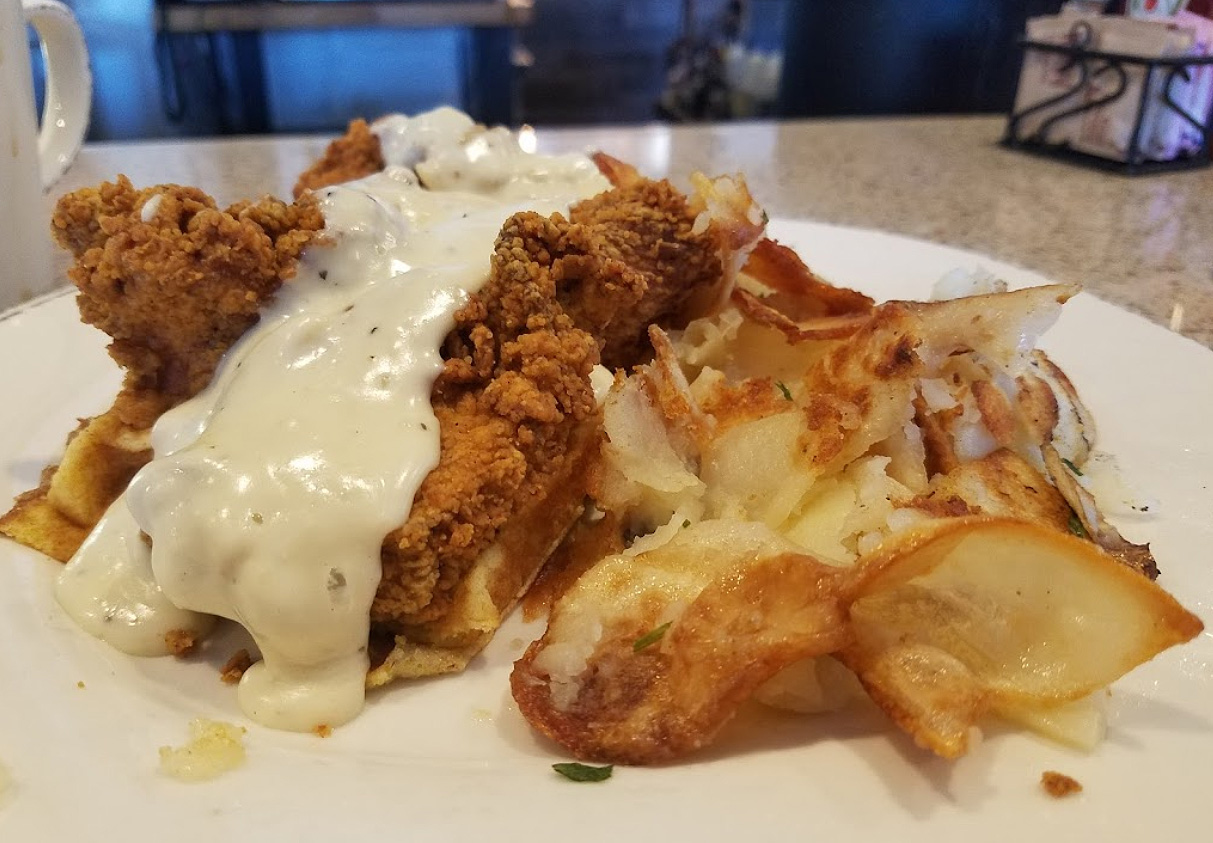
Chicken Maryland is a historic fried chicken dish from Maryland. In its classic form, it consists of chicken pieces lightly coated in flour, pan-fried in a shallow layer of fat, and served with a cream gravy made from the flavorful drippings left in the pan. The exact inventor is unknown, but Maryland-style fried chicken was established by the late 19th century, with named recipes appearing in print by the 1880s. By the end of the century, it was already recognized as a distinctive regional way of cooking fried chicken. The defining feature of the American version is its cooking method, not a thick batter or breadcrumb crust. A whole chicken is usually divided into serving pieces, seasoned, and coated with flour; some recipes first dip the chicken in milk before flouring it. The pieces are fried in a heavy skillet with lard, shortening, butter, or another cooking fat. After the exterior browns, the pan is covered for part of the cooking time. This traps steam and helps the bone-in chicken cook through while remaining moist, producing a texture somewhere between conventional fried chicken and a covered skillet fry. The lid is removed toward the end so that the coating can regain some crispness. Cast iron is particularly well suited to the method because it holds heat evenly, but it is not essential. Buttermilk marinades, thick batters, and heavily seasoned breadcrumb coatings belong mainly to later adaptations rather than the basic Maryland technique. After the chicken is removed, the drippings in the skillet are used to make the characteristic gravy. Flour is stirred into the remaining fat, followed by milk, cream, or a combination of the two. The mixture is cooked until it forms a smooth, pale gravy flavored by the browned flour and chicken drippings. Depending on the recipe, the gravy can be poured directly over the chicken or served around it. It is generally lighter in color than ordinary brown meat gravy and is one of the elements that most clearly separates Maryland fried chicken from many other American fried chicken styles. Corn fritters became one of its best-known accompaniments, while biscuits, corn, potatoes, sweet potatoes, and other vegetables also appear with the dish. No rule required serving the original dish exclusively with corn fritters and biscuits. During the early 20th century, Chicken à la Maryland moved beyond Maryland and entered international hotel and restaurant cooking. It was sufficiently well known by 1912 to appear as Chicken à la Maryland on the first-class luncheon menu of RMS Titanic on April 14, 1912, the final day of the ship's voyage. The surviving menu confirms the name of the dish, although it does not record exactly how the Titanic's kitchen prepared or garnished it. Its appearance on the menu therefore shows Chicken Maryland's international reputation at the time. Still, it does not establish that the Titanic version included bananas, bacon, cream gravy, or any other particular garnish. Auguste Escoffier later codified an elaborate French restaurant interpretation in Ma Cuisine, published in 1934. His version differed considerably from the simpler Maryland skillet dish. The chicken was coated with flour, egg, and breadcrumbs, then cooked in butter to form a more substantial crust. It was accompanied by corn fritters, potato croquettes, bacon, and bananas cooked in butter, with a cream-based sauce flavored with horseradish. This combination helped establish the banana as one of the most recognizable features of Chicken Maryland outside the United States, even though fried banana was not a defining ingredient of the original Maryland fried chicken. The sweet fruit, bacon, breadcrumbed chicken, and rich sauce transformed a regional American fried chicken into the more elaborate Chicken à la Maryland found in European hotel cooking. This international version developed several further variations. In Britain, particularly in older hotel cooking and some Chinese takeaway menus, Chicken Maryland came to mean breaded or battered fried chicken served with bacon, chips, and a fried banana or banana fritter; pineapple sometimes replaces or accompanies the banana. In Australia, the name developed an additional meaning: a “chicken Maryland” can refer to a whole chicken leg consisting of the thigh and drumstick. The same cut also became the basis of a once-popular Australian restaurant and pub meal served with crumbed or fried chicken, banana or pineapple, and chips. In Argentina and neighboring parts of South America, suprema de pollo Maryland developed into another distinct version, generally consisting of a breaded chicken breast served with fried banana, bacon, creamed corn, peas, and fried potatoes. These dishes share a name and ultimately descend from the international Chicken Maryland tradition, but they should not be treated as components of the original Maryland recipe. Pineapple is therefore a later international substitution rather than a defining ingredient, and the same is true of the very thick breadcrumb coating found in many modern versions. The American form is generally simpler: bone-in chicken is flour-coated, shallow-fried in a covered skillet, and served with cream gravy. The international chicken à la Maryland is more elaborate, commonly using breadcrumbed chicken together with contrasting savory and sweet garnishes such as bacon, corn fritters, and fried banana. Both versions can legitimately be called Chicken Maryland, but they represent different stages in the history of the dish rather than interchangeable recipes. Chicken Maryland is normally served hot as a substantial main course and eaten with a knife and fork, particularly when bone-in chicken and gravy are involved. It is not specifically an evening meal and can be served for either lunch or dinner. Its American character comes from the contrast between browned, flour-coated chicken and smooth cream gravy, while the internationally famous version adds a much more unusual combination of crisp breading, salty bacon, sweet fried fruit, corn fritters, and rich sauce. What began as a Maryland method of skillet-frying chicken ultimately became an international restaurant dish whose name now describes several considerably different preparations around the world.
02 / MAIN DISH INGREDIENTS
Deep-fried Dish
03 / RECIPE
There is no recipe in the saved data.
Record ·