01 / IDENTITY
- Category
- Snack
- Country
- Nepal
- Region
- Kathmandu
ABOUT THE DISH
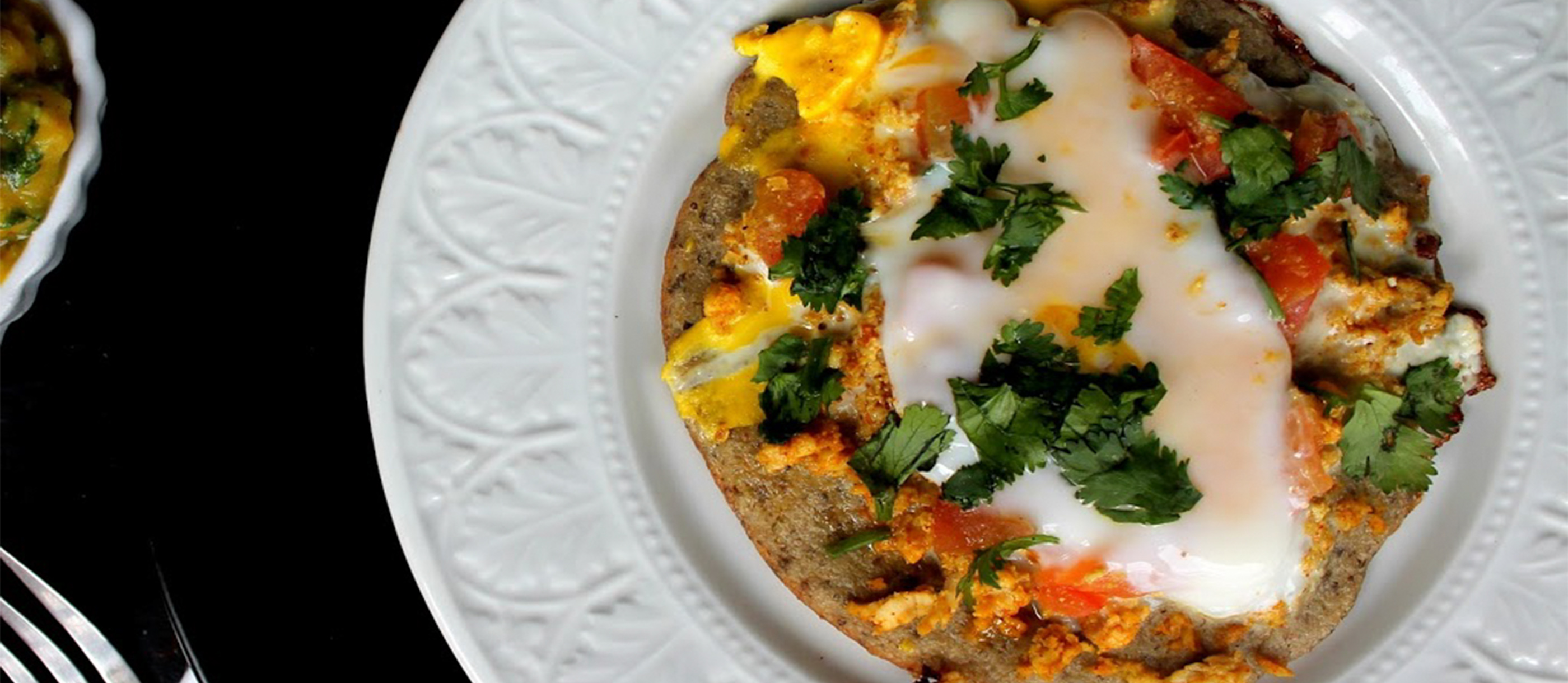
Chatmari is a thin, savory crepe made from a smooth batter of milled rice flour and water, baked on a flat iron griddle until the bottom crisps while the top remains soft enough to support savory toppings. This flatbread originated within the Kathmandu Valley during the Malla dynasty, which ruled from the 12th to the 18th centuries. Agrarian communities across the valley made the bread as a ceremonial food for Dewali, an annual religious event focused on worshipping ancestral family deities. Written records from medieval Guthi land trust systems outline its role as a feast component distributed during autumn rice harvest festivals. Soaking raw white rice overnight is mandatory before grinding it into a highly fine, powdery flour. This flour whisks together with cold water to form a completely loose, pourable white liquid. A heavy cast-iron pan, locally known as a tawa, is heated over an open flame and coated with a thin layer of mustard oil. A ladle drops a precise volume of the wet batter directly onto the hot metal, spreading instantly into a wide, uniform circle. Unlike standard pancakes, the batter never flips. Instead, a heavy metal lid is dropped over the pan, trapping the escaping steam and cooking the upper surface completely, while the intense heat at the bottom creates a brittle, scorched crust. Because it’s often topped with eggs, cheese, meat, or vegetables, chatmari is often called Nepali pizza. A common variation adds heavily spiced minced water buffalo meat, mixed with crushed cumin, fresh ginger, and raw garlic, directly onto the wet batter before the lid goes on. The trapped steam forces the meat fats into the porous rice base. Other variations crack a whole chicken egg over the surface, breaking the yolk and spreading it edge to edge, or use vegetarian toppings like boiled black-eyed peas and finely chopped green onions. The flatbread slides completely intact off the hot iron pan straight onto a wide brass plate. Slicing the large circle into triangular wedges makes it easier to handle, as eating it requires using bare fingers to fold the brittle edges inward to trap the loose toppings. A small bowl of heavily fermented radish achaar or an intensely acidic roasted tomato and sesame seed paste sits adjacent to the hot crepe, providing a sharp contrast to cut through the rendered animal fats and dense rice starches.
03 / RECIPE
A recipe for this dish has not been added yet.