01 / IDENTITY
- Category
- Poultry Dish
- Country
- Portugal
- Region
- Braga District
ABOUT THE DISH
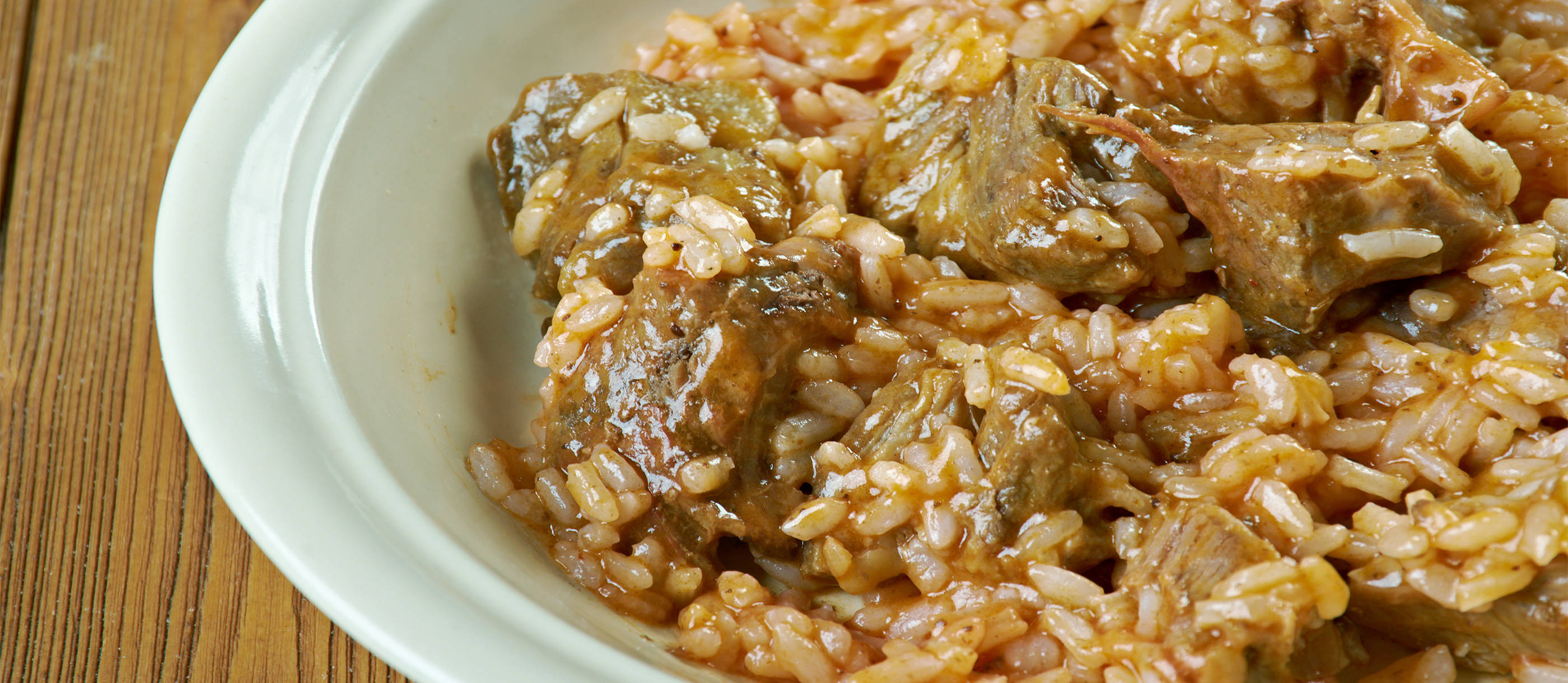
Cabidela is a dark, highly acidic meat-and-rice stew thickened with a sauce made from the freshly collected blood of the slaughtered animal, mixed with vinegar. The main ingredients are traditionally gathered by slaughtering a free-range chicken or rabbit and immediately catching the draining blood in a deep bowl. A generous splash of sharp red wine vinegar is stirred into the blood right away to prevent it from coagulating. The meat is then cut into small bone-in pieces and browned in a hot iron pot coated with olive oil. Chopped white onions, minced garlic, and dried bay leaves soften in the same pot alongside the searing meat. A clear broth is added to cover the ingredients, and the mixture simmers steadily until the meat becomes very tender. Raw short-grain rice, especially the starchy Carolino variety, is then poured directly into the boiling liquid. Just before the rice finishes absorbing the broth, the reserved vinegar-and-blood mixture is added to the pot. The whole mixture quickly turns a deep reddish-black color as the heat thickens the blood into a rich, velvety gravy. The rice remains very moist, suspended in the dark sauce. The origins of this cooking method trace to the 16th century in the northern Minho region of the Iberian Peninsula. Written records from 1573 mention the meal being served during the reign of King Sebastian. As maritime exploration expanded trade routes across the Atlantic and Indian Oceans during the 1500s and 1600s, sailors and merchants carried the recipe to places such as Brazil, Angola, and Goa. In hot tropical climates, the strong acidity helped preserve meat before modern refrigeration. A prominent adaptation from the state of Minas Gerais removes the rice from the pot entirely and serves the thick, dark stew over a dense bed of plain cornmeal mush known as angu. Other regional versions replace the standard poultry with wild game, such as wild boar, or with farm-raised pork, resulting in a gamier, fattier dish. In coastal Southeast Asian communities, the acidic base remains essential, but duck is used as the protein source, and sharp tamarind paste replaces vinegar to prevent the liquid from clotting. Cabidela is usually brought straight from the stove to the table in the original cast-iron cooking vessel. The thick, metallic sauce and moist rice require a sturdy spoon for serving onto individual plates. A raw leafy green salad dressed only with olive oil and lemon juice is almost always served beside it, adding a crisp, acidic contrast that cuts through the heavy iron flavor and rich animal fat.
03 / RECIPE
A recipe for this dish has not been added yet.