01 / IDENTITY
- Category
- Seafood Soup
- Country
- France
- Region
- Marseille
ABOUT THE DISH
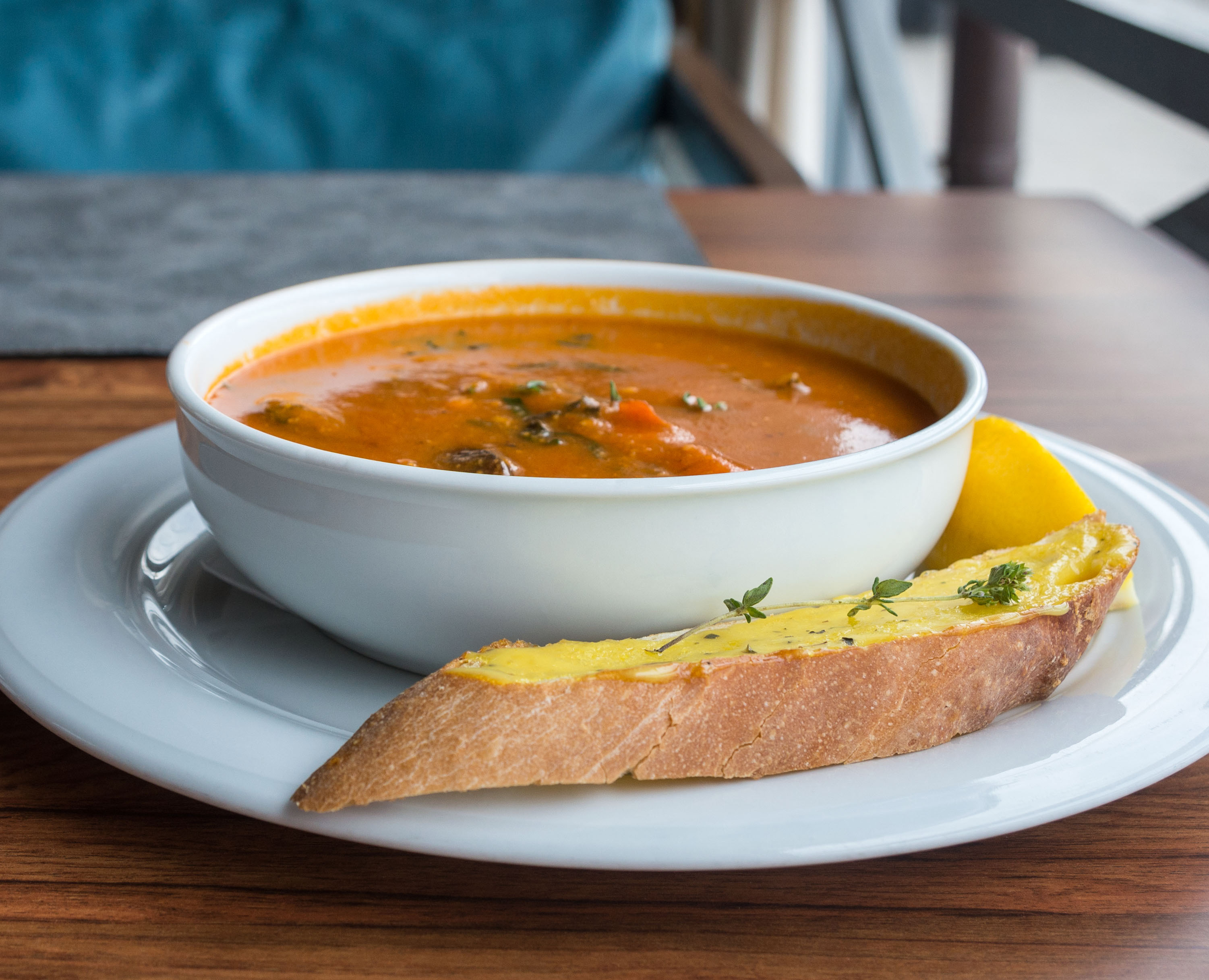
This traditional Provençal fish soup (and stew) originated in the 18th century when it was first concocted by Marseillaise fishermen, who would prepare it using the leftovers from their daily catch, making the best of what they had in their nets. Over time, bouillabaisse evolved into one of the most luxurious seafood dishes in the world: it is found in every upscale restaurant in the lively seaport city of Marseille where it can cost up to €200 for a meal for two. Anything below €50 is considered an ordinary fish soup—a good rule of thumb for those who want to taste the real thing. What gives bouillabaisse both its unique flavor and its high price is the red scorpionfish—known in French as rascasse or scorpion de mer —a type of venomous rockfish found only in the Mediterranean. Other ingredients may include several varieties of whitefish, mussels, crabs, squid, and sometimes even lobster or eel. Another thing that makes Marseille's signature dish so distinctive is its vibrant orange color, as well as the flavors and aromas arising from a selection of Provençal herbs and spices, especially saffron, fennel, and orange zest. Delicately infused with white wine and anise liqueur, bouillabaisse is traditionally served in two courses: the thick, rich soup is enjoyed with rouille sauce and garlic-rubbed croutons or toasted bread, while the fish and shellfish are served separately.
03 / DISH STRUCTURE
Source facts are separated into components, processes and relations. Component roles remain FoodHow candidates.
fish broth + several kinds of fish + potatoes + rouille + bread
main component
Local bony Mediterranean fish is added in sequence and cooked with vegetables, herbs and spices.
accompaniment
A pungent sauce based on olive oil, garlic and saffron accompanies slices of bread.
component relation
The hot broth arrives first with bread and rouille; fish and potatoes follow on a separate platter.
04 / INGREDIENT GROUPS
dish-defining
The Marseille tradition emphasizes very fresh local bony fish.
catch-dependent
component
accompaniment
05 / PROCESS
An aromatic fish broth with vegetables, herbs and spices
Different fish cook according to their size and firmness
The start of active cooking
Cooking continues at a gentler simmer
Broth and fish become two connected parts of one service
06 / DEFINING TRAITS
This is a source-based working diagnosis, not a universal legal standard.
07 / VARIATIONS
Broth, fish and potatoes arrive separately; rouille and bread accompany the broth.
Components arrive separately but the diner combines fish and broth in a soup plate.
Crustaceans and other seafood may be added to the core selection of fish.
NAME
The Provençal name is associated with two actions: bringing the pot to a boil, then lowering the heat to continue at a simmer.
GEOGRAPHY LEVELS
08 / CULTURAL CONTEXT
Marseille fishermen made a family dish from parts of the catch not sent for sale.
The simple family dish became more elaborate, gaining a binding base and versions with shellfish.
Marseille restaurateurs created the Bouillabaisse Charter to describe the basic ingredients and service of a quality version.
Mediterranean fish soups existed in Greek and Roman cooking, but that alone does not establish a direct lineage to modern bouillabaisse.
context, not proven lineage10 / SOURCES
name, geography, composition, preparation and service
local tradition, history, service and charter
normative position of participating Marseille restaurateurs
11 / RECIPE
The recipe has been downloaded and is ready to be parsed.