01 / IDENTITY
- Category
- Pork Dish
- Country
- South Korea
- Region
- not specified
ABOUT THE DISH
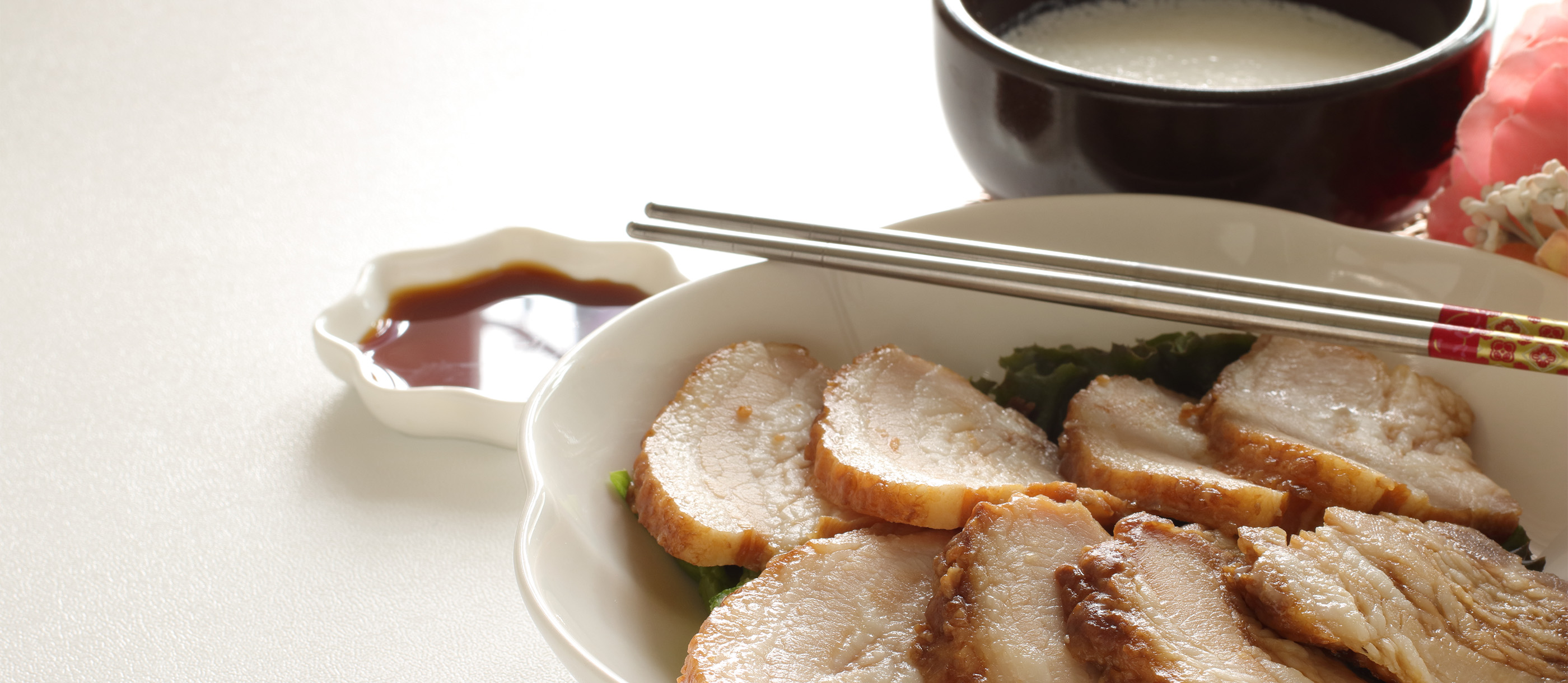
Bossam is a hearty meal centered on thinly sliced, mildly flavored boiled pork, bundled in leafy greens with pungent sauces and crisp vegetables. The origins of this boiled meat are closely tied to the annual autumn agricultural labor event known as gimjang, where vast quantities of winter cabbage are harvested and mixed with spices to make kimchi. Because this massive workload required heavy caloric replenishment, large blocks of pork were submerged in boiling water and served immediately alongside the freshly salted, unfermented cabbage leaves. The solid blocks of pork belly or shoulder are placed into a boiling liquid heavily flavored with ginger, whole garlic cloves, scallions, and thick fermented soybean paste to cook. This specific boiling liquid completely eliminates lingering animal odors from the fat while softening the meat. Sometimes, instant coffee granules or dark soybean sauce are poured directly into the stock to dye the outer layer of the fat a rich, appetizing brown. The pork simmers continuously until it is highly tender, then it is removed, briefly cooled, and sliced into neat, thick rectangles. Upon arrival at the table, the warm meat sits on a large shared platter, surrounded by a vast array of wrapping components. Fresh lettuce, aromatic perilla leaves, or lightly salted napa cabbage serve as the outer vessel. A slice of the warm pork is placed onto the leaf and crowned with saeujeot, a highly salty liquid filled with tiny fermented shrimp that cuts through the rich pork fat. A dollop of thick, spicy soybean paste, raw green chilies, and a remarkably sweet, crunchy radish salad coated in red chili flakes join the meat inside the leaf before the entire bundle is folded tightly and eaten in a single bite, typically accompanied by rice, sweet kimchi, and shrimp sauce. The meal is widely regarded as a highly favored late-night delivery option and is often consumed alongside cold alcoholic beverages. Moving beyond the standard pork-and-radish combination, distinct modifications introduce raw seafood directly into the mix. Gul bossam integrates freshly shucked, raw oysters straight into the wrap, creating a sharp, briny contrast to the heavy meat oils. Another distinct offshoot, hoe bossam, incorporates chewy, heavily spiced raw skate or flounder into the vegetable bundle, drastically altering the texture and introducing a pungent bite to the savory profile.
03 / RECIPE
A recipe for this dish has not been added yet.