01 / IDENTITY
- Category
- Rice Dish
- Country
- Nepal
- Region
- not specified
ABOUT THE DISH
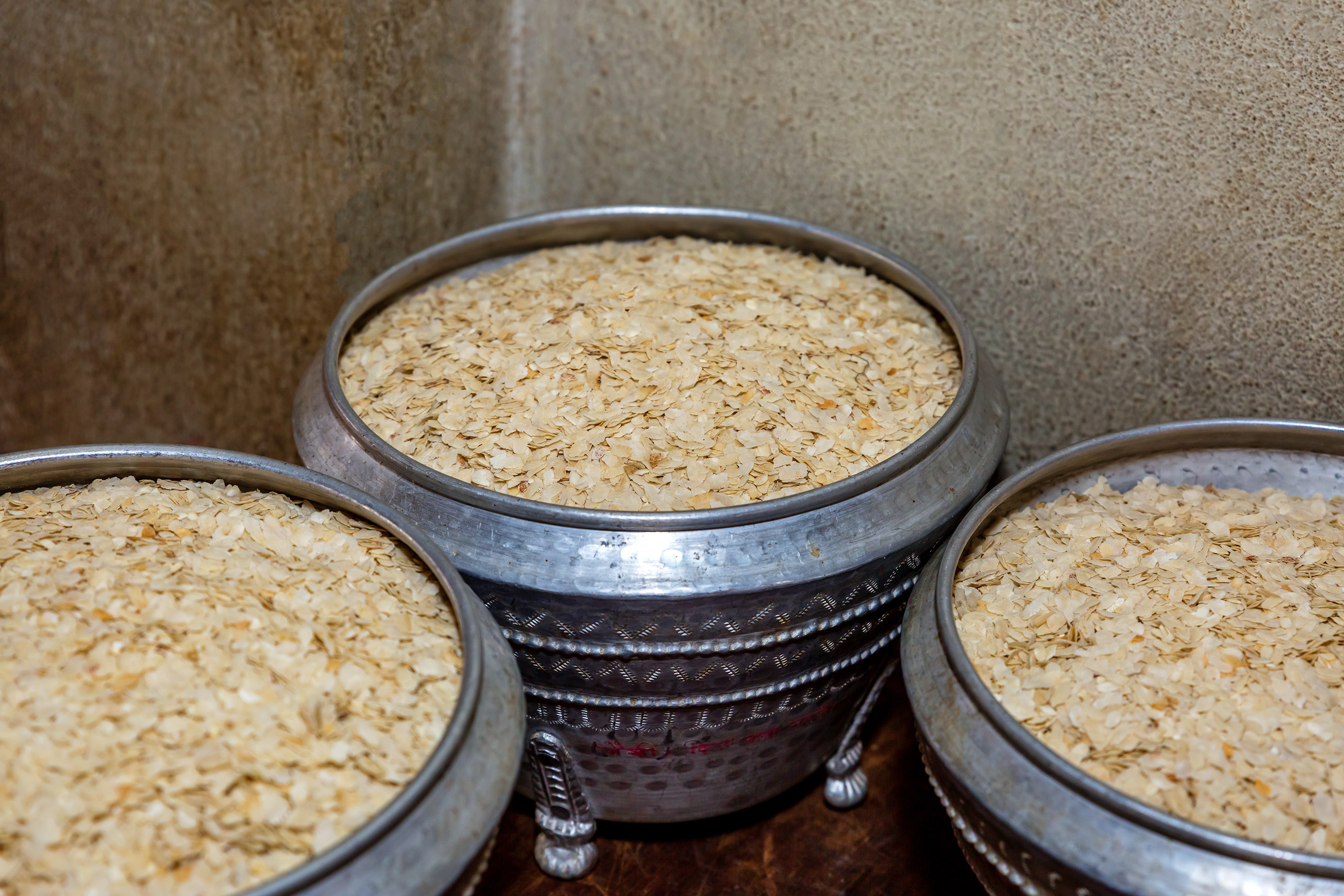
Baji is a dry, flattened rice staple made by parboiling paddy and pounding it into thin flakes. The result is a shelf-stable, calorie-dense carbohydrate base that can be eaten without further cooking. Producing baji requires an intense, multi-step process. It begins with Taichin rice, a short, plump grain that thrives in the specific microclimate of the Kathmandu Valley. The rice is harvested entirely by hand, and the raw paddy is parboiled while it still retains its natural moisture. This boiling step loosens the outer husk and helps lock the grain’s nutrients into its core. After parboiling, the grains are briefly sun-dried until they become brittle but not fully desiccated. They are then moved into a wood-fired clay oven known locally as a khakha, where they are dry-roasted. While still hot, the toasted grains are transferred into a large wooden mortar called an okhal. Heavy, rhythmic strikes from a thick wooden pestle flatten the rigid grains into paper-thin flakes. A final winnowing step tosses the flattened rice into the air, removing broken fragments and leftover hulls. What remains is a clean, dry product that needs no additional heating before eating. The origins of baji are deeply rooted in the Newar agrarian communities of the Kathmandu Valley, where it has served for centuries as an essential survival ration. Farming households developed this preservation method to ensure a ready-to-eat source of calories during the demanding monsoon planting season, known as Asar. During this period, flooded and muddy fields made it difficult to light fires or prepare hot meals. Historical records and surviving regional practices also connect baji to wedding ceremonies. In specific marital rites, the groom asks the newlywed bride to serve him this flattened rice three consecutive times. Each request uses a decreasing level of linguistic formality, symbolizing the couple’s new intimacy and changed social relationship. The milling process determines the final texture and color of the flakes. Red baji retains the outer bran layer during pounding, creating a chewy, nutty flake that requires considerable effort to chew. White baji has the husk removed completely before pounding, producing a lighter, more delicate shard that softens quickly in liquids. When served, baji is usually piled high in the center of a wide brass or leaf plate and surrounded by sharply spiced side dishes. Because the flakes absorb moisture extremely well, they provide the necessary base for fiery, watery curries such as aloo bodi tama, made with potatoes, fermented bamboo shoots, and black-eyed peas. A major communal feast platter known as samay baji depends on this flattened grain. It pairs a central mound of baji with broiled buffalo meat, fried black soybeans, boiled eggs, and raw minced meat. To eat it, small handfuls of the dry flakes are gathered with bare fingers and pinched together with wet curries or thick gravies, which soften the rigid grains just before eating. Also, a common summer snack is made by soaking a large scoop of baji in cold, sour curd. The curd quickly hydrates the flakes, turning them into a dense, sweet, and tangy porridge that provides fast calories during intense agricultural labor.
03 / RECIPE
A recipe for this dish has not been added yet.